Metal Stamping Die Industry News & Technical Insights
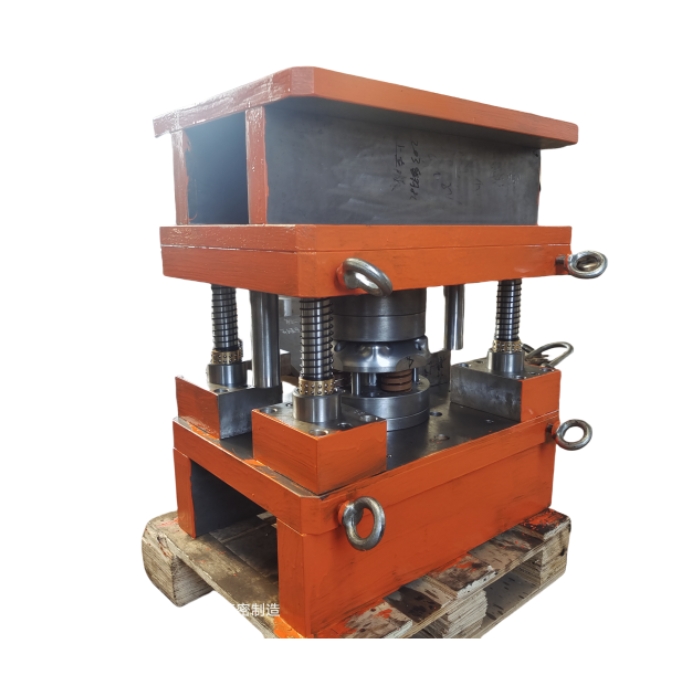
In the heavy-duty automotive manufacturing sector, achieving high precision while maintaining cost-efficiency is a constant challenge. Among various metal forming methodologies, the sheet metal forming process—specifically deep drawing—is essential for producing complex, seamless, and hollow components like fuel tanks, oil pans, and structural chassis parts. However, ensuring consistent quality across high-volume production cycles requires an exceptional metal stamping die layout and rigorous engineering control.
When dealing with deep drawing tooling design, standard configurations rarely suffice. Every automotive component possesses unique geometries, specific material thicknesses, and distinct tensile strengths. Designing a custom deep drawing die involves meticulous calculations of the drawing ratio, blank holder force, and punch radius.
If the blank holder force is too low, the sheet metal wrinkles as it is drawn into the die cavity. Conversely, if the pressure is excessively high, the material undergoes severe stress, leading to tearing or thinning. Advanced die manufacturing processes now heavily rely on finite element analysis (FEA) software to simulate metal flow, predicting potential failure points before the actual tool and die are machined.
For high-volume automotive stamping tools, relying on a single-stage deep drawing process can slow down production. This is where progressive die manufacturing offers a massive advantage. By integrating multiple stations—such as blanking, drawing, restriking, and piercing—into one continuous strip, manufacturers can drastically boost throughput.
A high-performance progressive metal stamping die ensures that:
Material Waste is Minimized: Optimal nesting of parts on the metal strip saves raw material costs.
Dimensional Accuracy is Maintained: Carrier strips guide the component flawlessly between stations, ensuring tight tolerances.
Labor Costs are Reduced: The automated nature of progressive tooling reduces manual handling, lowering the margin for human error.
To gain top-tier search visibility and prove industry authority, understanding specific production setbacks is key. High-quality precision stamping tools must combat common deep-drawing issues like springback and galling. Springback occurs when the metal tries to return to its original shape after forming, which can be compensated by overbending the die angles. Galling, which is surface damage caused by friction between the sheet metal and the tool steel, can be prevented by applying advanced surface coatings like TiN (Titanium Nitride) or TD (Thermal Diffusion) to the metal stamping die components, alongside premium lubrication.
In conclusion, investing in superior custom deep drawing die design and advanced progressive die technologies is the only way to meet modern automotive standards. Partnering with an experienced die manufacturer ensures that your tooling remains resilient, efficient, and capable of delivering flawless parts for millions of cycles.